

We’re excited to have you join us! This guide provides everything you need to prepare for your upcoming journey—what to pack, cultural etiquette, visa info, and more—so you can travel with confidence and ease.
OMAN FACT SHEET
You will receive -by email- your final travel documents, along with your guide and tour leader’s contact details and meeting point information, two weeks prior to arrival.
| Official Name | Sultanate of Oman |
| Capital | Muscat |
| Flag | 🇴🇲 |
| Head of State & Government | Sultan Haitham Bin Tariq Al Said |
| Area | 309,500 km² |
| National Revenue | Oil / LNG / Mining / Trading / Logistics / Fishers / Tourism |
| Government Type | Monarchy (Absolute Monarchy/Sultanate) with a bicameral advisory system |
| Official Language | Arabic (English widely used in business) |
| Official Religion | Islam (Majority Ibadi) |
| Land Area | 309,500 sq km (approx. 119,500 sq miles) |
| Coastline | 3,165 km |
| Population (2025 est.) | ~5.31 million |
| Demographics (2025) | Omani Nationals: ~56-58%; Expatriates: ~42-44% |
| Life Expectancy (2025) | Male: 79 years; Female: 82 years |
| Currency | Omani Rial (OMR), pegged to USD (1 OMR ≈ $2.60 USD) |
| GDP (Growth Rate) | 2.4% (2024-2025 est.) |
| Key Economic Sectors | Oil & Gas, Manufacturing, Logistics, Tourism, Fisheries, Mining |
| Major International Airports | Muscat International (MCT), Salalah International (SLL) |
| Key Ports | Sohar, Salalah, Duqm, Port Sultan Qaboos |
| National Day | November 20th |
| National Centre For Statistics & Information | https://data.gov.om |
OMAN HISTORY
Oman has a rich human history stretching back over 100,000 years, evolving from ancient copper trade into a major maritime empire and a modern nation.
Ancient and Early History (Pre-history – 6th Century CE)
- 100,000+ Years Ago: Early human habitation begins in Arabia.
- Camel Domestication: 12th down to the 10th century BC in Arabia.
- 3500 BCE: The ingenious Falaj underground irrigation system was developed, transforming agriculture in arid areas.
- 3200 BCE: Known as Majan in Sumerian texts, Oman emerges as a major global supplier of copper to Mesopotamian civilizations.
- 6th Century BCE: Parts of Oman fall under the control of the ancient Persian Empire.
Islamic Era and the Imamate (7th – 15th Century)
- 628 CE: Islam arrives in Oman, and the population embraces it voluntarily.
- 7th – 8th Century: Oman adopts Ibadhism, a distinct and moderate school of Islamic thought focused on community consensus and elected leadership.
- 9th Century: An independent Imamate is established in the interior, while coastal cities like Sohar thrive on booming trade with India, China, and East Africa.
- (1154–1624 AD) Al Nabaina Era: A critical period in Omani history that was established by the Banu Nabhan, an Arab tribe of Azdi origin, who took control of the Omani interior following the collapse of the Kingdom of Humoz (9th-1622 AD).
Portuguese Occupation and the Omani Empire (1507 – 1856)
- 1507: The Portuguese capture coastal cities including Muscat to control trade routes.
- 1624: Nasir bin Murshid Al Ya’arubi was elected Imam, marking the beginning of the Ya’aruba dynasty (1624-1744). He united much of Oman and led the campaign to expel the Portuguese from Oman’s coastal strongholds.
- 1650: Omani forces expel the Portuguese under the Yoruba dynasty.
- 1744: Ahmad bin Said al-Busaidi drives out Persian invaders and establishes the Al Bu Said dynasty, which rules Oman to this day.
- 1698: Zanzibar became part of Oman’s overseas territories under the Omani Imam Saif bin Sultan Al Ya’rubi, following the defeat of the Portuguese at Mombasa. This marked a significant expansion of Omani influence along the East African coast.
- 19th Century: The Peak of the Omani Empire Under Sultan Said bin Sultan Al Busaidi (1806–1856), the Omani Empire reached the height of its maritime power and influence. His rule extended Omani authority across the Arabian Sea and Persian Gulf, with extensive territories and trading interests along the East African coast, including Zanzibar, which became the empire’s principal capital in 1840. Sultan Said strengthened Oman’s international position through diplomatic and commercial relations with major powers. In 1833, Oman concluded a Treaty of Amity and Commerce with the United States, one of the earliest formal treaties between the United States and an Arab state. He also maintained important relations with Britain and France while seeking to preserve Omani independence and control over its maritime interests. Following Sultan Said bin Sultan’s death in 1856, the Omani Empire was divided between his sons. Majid bin Said became Sultan of Zanzibar, while Thuwaini bin Said ruled Oman. This division effectively separated the empire’s African and Asian domains and marked the beginning of the decline of the unified Omani maritime empire.
Modern Era
- 1960s: Oil is discovered, though the country remains isolated under Sultan Said bin Taimur.
- 1970: The Omani Renaissance. Sultan Qaboos bin Said Al Said came to power in 1970 in a peaceful transition of power, ushering in a new era known as the Omani Renaissance (Al Nahdah). Under his leadership, Oman opened itself to the modern world and underwent profound economic and social transformation. Oil revenues were invested extensively in education, healthcare, roads, ports, electricity, water infrastructure, and modern public services, transforming the country from a relatively isolated and underdeveloped state into a modern nation. During the early years of his reign, Sultan Qaboos also worked to unify the country and consolidate the authority of the state. The Dhofar Rebellion, which had challenged the government since the 1960s, was brought to an end in 1975, with assistance from regional allies and other international partners. Sultan Qaboos gradually expanded political participation and established Oman’s modern constitutional framework through the Basic Law of the State, first issued in 1996. In 2003, all citizens gained the right to participate in elections for the Consultative Council. Beyond its domestic transformation, Oman developed a reputation for balanced diplomacy and mediation. Its neutral and pragmatic foreign policy enabled it to maintain relations with countries across political divides and contributed to Oman’s role in facilitating the secret US–Iran diplomatic contacts in 2013, which helped pave the way for the 2015 Iran nuclear agreement.
- 2020 – Present: 2020–Present: Oman Vision 2040. Following the passing of Sultan Qaboos bin Said in January 2020, Sultan Haitham bin Tariq Al Said succeeded him as Sultan of Oman, continuing the country’s path of stability and development while setting a new vision for its future. Under Sultan Haitham’s leadership, Oman is implementing Oman Vision 2040, a long-term national strategy aimed at building a diversified, sustainable, and knowledge-based economy while reducing dependence on oil revenues. Key areas of development include tourism, logistics, fisheries, manufacturing, renewable energy, technology, and entrepreneurship, alongside continued investment in education, infrastructure, and human capital. Oman has also maintained its long-standing tradition of balanced and pragmatic diplomacy, seeking constructive relations with countries across the region and maintaining open channels of communication with regional powers, including Iran and Saudi Arabia. This approach continues Oman’s distinctive role as a trusted partner and mediator in regional affairs.
OMAN MARITIME
Oman’s maritime history spans an extraordinary 5,000 years, establishing the nation as a pioneering seafaring power and vital bridge between civilizations . From the third millennium BCE, Omani sailors navigated the Indian Ocean, connecting Mesopotamia, the Indus Valley, and East Africa through thriving trade networks . By the Islamic Golden Age, Omani vessels regularly sailed as far as China, carrying frankincense, dates, and copper while returning with silk and ceramics . This maritime legacy produced legendary navigators like Ahmed bin Majid, whose scientific contributions guided sailors across oceans for centuries . Today, Oman honors this heritage through world-class ports at Sohar, Salalah, and Duqm, while the Jewel of Muscat reconstruction and National Museum’s Maritime Gallery preserve these traditions for future generations.
The Jewel of Muscat is a breathtaking recreation of a 9th-century Arab dhow, based on the Belitung shipwreck discovered off Indonesia . A joint initiative between Oman and Singapore, this 18-meter vessel was masterfully constructed using traditional techniques—its teak planks sewn together with over 130 kilometers of coconut-fiber rope . In 2010, a courageous crew retraced ancient maritime trade routes, sailing over 5,000 kilometers from Oman to Singapore . Enduring storms and relying on celestial navigation, the voyage was a testament to a shared heritage . Upon arrival, the ship was presented as a royal gift to Singapore, where it remains a powerful symbol of the enduring historical bonds across the Indian Ocean.
WEATHER & SEASONAL TIPS FOR OMAN & GCC
The climate across Oman and the Gulf Cooperation Council (GCC) countries is mostly arid desert, with hot summersand mild, pleasant winters. Understanding the weather will help you pack appropriately and prepare for the best travel experience.
🌤️ General Climate Overview
| Season | Months | Conditions |
|---|---|---|
| Winter | Nov – Mar | Mild & pleasant (ideal for travel) |
| Spring | Mar – May | Warming up, dry & sunny |
| Summer | Jun – Sep | Extremely hot (especially inland) |
| Autumn | Sep – Oct | Cooling down, still warm |
🌡️ Temperature Ranges (Approximate)
| Region | Winter (°C) | Summer (°C) |
|---|---|---|
| Muscat, Oman | 17–28°C | 30–45°C |
| Salalah, Oman | 18–29°C | 24–32°C (Khareef season) |
| Dubai, UAE | 20–30°C | 35–48°C |
| Riyadh, KSA | 10–25°C | 38–50°C |
🌧️ Summer Cyclones & Rainfall Warnings
While most of the GCC experiences minimal rainfall, coastal Oman—especially the Dhofar region—can be affected by tropical storms or summer cyclones, mainly between May and October.
- Cyclone season peaks in May–June and October.
- Heavy rainfall and strong winds can cause flooding in wadis (dry riverbeds) and disrupt travel plans, particularly in southern Oman.
- Khareef Season (July–Sept) in Salalah brings cool, misty rains and lush greenery—perfect for nature lovers, but prepare for wet conditions.
⚠️ Travel Advisory: Always check weather forecasts, especially if traveling to coastal or mountain areas during cyclone season. Panorama Travel monitors local alerts and will inform guests of any changes affecting tours. Visit Oman Meteorology.
PAYMENT & CURRANCY
The Gulf Cooperation Council (GCC) countries—Oman, UAE, Saudi Arabia, Qatar, Bahrain, and Kuwait—have strong and stable currencies. Here’s what travelers need to know:
💰 Local Currencies
| Country | Currency Name | Currency Code | Approx. Exchange to USD |
|---|---|---|---|
| Oman | Omani Rial | OMR | 1 OMR ≈ 2.60 USD |
| UAE | UAE Dirham | AED | 1 USD ≈ 3.67 AED |
| Saudi Arabia | Saudi Riyal | SAR | 1 USD ≈ 3.75 SAR |
| Qatar | Qatari Riyal | QAR | 1 USD ≈ 3.64 QAR |
| Bahrain | Bahraini Dinar | BHD | 1 BHD ≈ 2.65 USD |
| Kuwait | Kuwaiti Dinar | KWD | 1 KWD ≈ 3.25 USD |
Note: Exchange rates may vary slightly. It’s advisable to check rates before your trip. Live approximate rate.
💳 Payment Methods
- Credit and debit cards (Visa, MasterCard & AMEX) are widely accepted in hotels, malls, and most restaurants.
- Apple Pay and Samsung Pay are widely accepted throughout the GCC, including Oman, the UAE, Saudi Arabia, Qatar, Bahrain, and Kuwait.
- Cash is still recommended for local markets, small shops, tips, and in remote areas.
- ATMs are available in all cities, Malls, Souqs, Service Stations and airports.
💱 Currency Exchange
- Currency exchange services are available at airports, banks, hotels, and exchange offices.
- Oman and some other GCC countries prefer transactions in their local currency, so it’s useful to carry small denominations of local cash.
✅ Tips for Travelers
- Let your bank know you’re traveling to the GCC to avoid card blocks.
- Carry some USD or Euros as backup; they are easy to exchange.
- Keep receipts when exchanging money, especially for re-exchange on departure.
- To confirm your identity, local currency exchange outlets require a valid passport.
TIPPING
General Tipping Principles
- Not Mandatory, but Appreciated: Tipping is not a requirement, and you will never be pressured to leave a tip. However, it is a kind way to acknowledge excellent service .
- Cash is King: Tips are best given in cash (in the local currency, Omani Rial) to ensure the money goes directly to the staff member who served you .
- Be Discreet: It is polite to hand a tip directly to the person rather than leaving it on a table.
- Always check your program inclusions. If gratitudes is already included, an additional tip is not necessary, though it is still a nice gesture for exceptional service .
Tipping Guidelines by Service
The table below provides a quick overview of typical tipping amounts for different services in Oman.
| Service | Guides | Drivers | Restaurants (Casual Dining) | Restaurants (Fine Dining) | Porters | Spa Services |
| Tipping | 5-10 OMR per day (per person) | 3-5 OMR per day (per person) | 5-10% or round up the bill | 10-15% of the bill | 0.5-1 (OMR) Per room | 10% of the service cost |
CONNECTIVITY & Wi-Fi MOBILE DATA
- All hotels in GCC provide free Wi-Fi, though speed and reliability may vary by location.
- Local telecom companies offer SIM cards with data packages for travelers, ranging from 6 $USD to 50 $USD, depending on the plan and data volume.
📱 Our Recommendations:
A. We suggest purchasing an international roaming package from your local mobile provider before travel. This helps:
- Avoid high roaming charges
- Keep your existing number active for easy communication.
B. If your mobile provider does not offer international packages, please let our travel specialist know. We’ll be happy to advise you on the best eSIM options available from trusted international providers.
BEHAVIOUR GUIDLINES FOR TRAVELERS TO ARABIA
GCC Countries are known for its deep-rooted traditions, warm hospitality, and respectful culture. As a visitor, you are highly welcomed—but it’s important to observe certain cultural norms and etiquette to ensure a positive and respectful experience.
1. Respect for Local Customs
- Loud or disruptive behavior is considered impolite in public places.
- GCC Citezens are modest and polite; travelers are expected to behave with similar courtesy.
- Avoid public displays of affection (hugging, kissing) in public areas.
2. Religious Sensitivity Respect for Local Customs
- Always ask permission before entering a mosque or religious site.
- During prayer times, show respect by lowering your voice and avoiding disruptions.
- Non-Muslims are not allowed inside certain religious sites unless specifically permitted.
- Do not eat, drink, or smoke in public during daylight hours in the month of Ramadan.
3. Photography Etiquette
- Always ask permission before photographing people, especially women or families.
- Avoid taking photos in military, police, or government areas.
- Be mindful not to intrude on private homes or local gatherings with your camera.
4. Interacting with Locals
- GCC Citezens are generally very friendly and hospitable.
- When offered coffee (qahwa) or dates, it’s polite to accept.
- Use your right hand for eating, shaking hands, or giving/receiving items.
- Public criticism of the Sultan or government is considered highly disrespectful and may have legal consequences.
5. Things to Avoid
- Drugs are strictly prohibited and carry severe penalties.
- Alcohol is only permitted in licensed venues—never drink or be intoxicated in public.
- Swearing, rude gestures, or aggressive behavior can lead to fines or arrest.
6. Greeting Etiquette in Islamic Culture
In Islamic tradition, physical contact between unrelated men and women is generally avoided—this includes handshakes.
- Men usually shake hands with men, and women with women.
- A man should not offer his hand to a woman, and vice versa, unless the other person initiates the gesture.
- Instead, a polite nod, hand over the heart, or verbal greeting (like As-salamu alaykum) is a respectful alternative.
Travel Tip:
✅ When greeting someone of the opposite sex, wait for them to extend their hand first. If they don’t, simply place your hand on your chest and smile—it’s a widely accepted and respectful gesture in Oman and other Muslim
✅ When in doubt, observe how locals behave and follow their lead. Respect, patience, and kindness go a long way in Arabia—and you’ll be met with the same in return.
DRESS CODE
Travelers to GCC Countries are encouraged to dress modestly and respectfully, in accordance with local customs and cultural expectations. Below are general guidelines to help you pack and dress appropriately throughout your journey:
GENERAL GUIDELINES WHILE TOURING (ALL TRAVELERS)
- Clothing should be modest, loose-fitting, and non-revealing.
- Avoid clothing with offensive symbols or slogans.
- Shoulders and knees should be covered in public places.
- Lightweight, breathable fabrics (like cotton or linen) are ideal due to the hot climate.
- Bring a hat, sunglasses, and sun protection for daytime outings.
For Women 👩🦰
- Women are not required to wear an abaya (long robe), but modest dress is still essential.
- Wear long skirts, loose trousers, and tops with sleeves (at least elbow-length).
- Headscarves are optional, but may be required when visiting religious or conservative areas.
- Avoid tight or transparent clothing.
- Swimwear is allowed at hotel pools and private beaches, but cover up when walking to/from these areas.
For Men 👨
- Shorts are not recommended in public in either country; long trousers are preferred.
T-shirts or short-sleeved shirts are generally fine, but sleeveless tops should be avoided.
Swimwear is acceptable at hotel pools or beaches but should not be worn elsewhere.
Bring a lightweight scarf or head cover for desert or sun exposure if going on outdoor adventures.

WHEN VISITING MOSQUES 🕌
- Women must cover their hair, arms, and legs completely (consider carrying a scarf and long outerwear). Panorama Travel provides traditional abayas for mosque visits, allowing guests to show cultural respect while also experiencing the elegance of local dress.
- Men should wear long trousers and avoid sleeveless tops. Shoes must be removed before entering.

Visiting the Royal Opera House is a highlight of cultural life in Muscat—dressing appropriately not only shows respect but enhances your experience of this world-class venue.
General Dress Code (All Visitors)
- Formal or smart business attire is required.
- Visitors not adhering to the dress code may be denied entry—even with a valid ticket.

For Women: 👩
- Modest, elegant attire such as a dress, long skirt, or trousers with a blouse.
- Shoulders and knees must be covered.
- Heels or formal flats are appropriate.
- No mini skirts, sleeveless tops, jeans, or casual footwear.
For Men: 👨
- Long-sleeved shirt and formal trousers.
- Closed formal shoes.
- A jacket or blazer is recommended (tie optional but appreciated).
- No jeans, t-shirts, sneakers, sandals, or shorts.
🎒 WHAT TO PACK
- Lightweight long-sleeve tops & trousers.
- A scarf or pashmina for women.
- Comfortable closed shoes or sandals (Proper walking shoes with good grip are recommended for this tour)
- Swimwear for hotel pools or private beaches.
- Quick-Dry Swim Shoes: Whether you’re wading into lagoons or on a pelagic tour, secure footing is the difference between a great memory and a nasty cut.
- A light jacket or sweater for cooler evenings (especially in winter, in desert areas or during flights)
Dressing with cultural awareness not only shows respect but also enhances your travel experience in Arabia. If you’re unsure, it’s always better to dress more conservatively, especially when exploring traditional or rural areas.
DRESS CODE FOR BIRDING & WILDLIFE ADVENTURES
You will receive a separate PDF document containing important guidelines regarding dress tips, required equipment, and specific instructions.
VISA ON ARRIVAL FOR GCC COUNTIES
Many Western, European, and Asian nationals enjoy visa-free or visa-on-arrival access to several GCC countries for short stays of up to 14 days.
List of nationals eligible for a free visa on arrival for short stays of up to 14 days:
| ALBANIA | ANDORRA | ARGENTINA |
| ARMENIA | AUSTRALIA | AUSTRIA |
| BELARUS | BELGIUM | BOLIVIA |
| BRAZIL | BRUNEI DARUSSALAM | BULGARIA |
| CANADA | CHILE | CHINA |
| COLOMBIA | CROATIA | CYPRUS |
| CZECH REPUBLIC | DENMARK | ECUADOR |
| ESTONIA | FINLAND | FRANCE |
| FRENCH GUIANA | GEORGIA | GERMANY |
| GREECE | HONG KONG | HUNGARY |
| ICELAND | INDONESIA | IRAN, ISLAMIC REPUBLIC OF |
| IRELAND | ITALY | JAPAN |
| KAZAKHSTAN | KOREA, REPUBLIC OF (SOUTH) | LATVIA |
| LEBANON | LIECHTENSTEIN | LITHUANIA |
| LUXEMBOURG | MACAU | MALAYSIA |
| MALTA | MOLDOVA, REPUBLIC OF | MONACO |
| NEW ZEALAND | NORWAY | PARAGUAY |
| POLAND | PORTUGAL | ROMANIA |
| RUSSIAN FEDERATION | Republic of North Macedonia | SAN MARINO |
| SERBIA, REPUBLIC OF | SEYCHELLES | SINGAPORE |
| SLOVAK REPUBLIC | SLOVENIA | SOUTH AFRICA |
| SPAIN | SURINAME | SWEDEN |
| SWITZERLAND | THAILAND | THE KINGDOM OF THE NETHERLANDS |
| TURKEY | Taiwan, China | UKRAINE |
| UNITED KINGDOM | UNITED STATES OF AMERICA | URUGUAY |
| VATICAN CITY STATE (HOLY SEE) | VENEZUELA |
✅ Common Entry Requirements:
- Passport valid for at least 6 months.
- Credit or debit card for any visa or entry fee payments at the borde.
If your nationality is not eligible for visa-on-arrival, please inform our travel specialist in advance so we can assist with pre-arranged visa processing ahead of your travel.
We’re here to ensure a smooth and hassle-free entry experience.
Please see an example of the passport copy you may be required to share, if requested for visa processing or to ensure a smooth and fast check-in at the hotel.

MEETING POINT, GUIDE & T/L CONTACT & FINAL TRAVEL DOCUMENTS
You will receive -by email- your final travel documents, along with your guide and tour leader’s contact details and meeting point information, two weeks prior to arrival.
EMERGENCY & MEDICAL PLAN
This will be sent to you in a separate email two weeks before the start of the tour, along with the final updated itinerary, meeting point details, and contact information for your guide and tour leader.
GROUP TRAVEL ETIQUETTE
To ensure an enjoyable and respectful experience for all participants, we kindly ask our guests to observe the following group travel etiquette during our tours:
1. ctuality Matters
Please be on time for all scheduled departures, meals, and activities. Delays affect the entire group and may impact planned experiences.
2. Respect Local Culture Pun
Dress modestly where appropriate, ask permission before photographing people, and follow local customs and guidelines.
3. Be Considerate of Others
Maintain a respectful tone, keep phone use to a minimum during group activities, and allow everyone a chance to engage with guides and ask questions.
4. Follow Guide Instructions
Our tour leaders and local guides are there to ensure your safety and enhance your experience. Please follow their directions and respect their expertise.
5. Noise Awareness
Keep noise to a minimum in shared spaces such as transport, accommodations, or natural settings—especially during early mornings or late evenings.
6. Wildlife & Nature Respect
Observe wildlife from a distance, avoid feeding animals, and stay on designated paths. Leave no trace.
7. Health & Hygiene
If you feel unwell, inform your guide immediately. Be mindful of hygiene during shared meals or transport.
8. Team Spirit
Traveling in a group means flexibility and cooperation. A positive attitude helps create memorable experiences for everyone.
By traveling with Panorama Travel, you are part of a community of respectful, curious, and responsible explorers. We appreciate your cooperation in making each journey smooth and enjoyable for all.
LUGGAGE & TRAVEL PACKING TIPS
To ensure smooth handling and compliance with airport and tour logistics, please follow the guidelines below when preparing for your trip.
General Guidelines
- We accept luggage that complies with standard airline baggage rules.
- All suitcases must lay flat on one side to avoid issues with airport baggage handling systems.
- Soft fabric suitcases are not recommended. Please use well-sealed, hard plastic or durable hard-shell cases.
- We suggest bringing only one waterproof backpack for daily use, and avoiding additional hand luggage if possible.
Suggested Luggage by Trip Duration
- 7–10 Day Tour
→ Small to Medium suitcase recommended - 10–14 Day Tour
→ Medium to Large suitcase, or two medium-sized suitcases
Recommended Luggage Dimensions
| Size | Height × Width × Depth (cm) |
| Small | 40 × 20 × 25 to 55 × 35 × 20 |
| Medium | 60 × 40 × 23 to 66 × 45 × 28 |
| Large | 75 × 50 × 29 to 76 × 52 × 30 |
Smart Packing Tips for an Easier Journey
To make your packing, unpacking, and repacking more efficient throughout your trip, we recommend the following:
✅ 1. Pack in 2–3 Day Segments
Organize your clothing and essentials into separate packs or cubes for every 2–3 days of the trip. This helps avoid unpacking your entire suitcase every time and keeps things simple and organized.
✅ 2. Use Nesting Luggage (Identical Bags That Fit Inside Each Other)
If possible, pack your medium bag inside your large suitcase, or a small bag inside your medium suitcase.
This strategy gives you the flexibility to:
- Travel light at the start
- Unpack one bag and repurpose the second for unexpected purchases, souvenirs, or extra gear later in the trip.
✅ 3. Use Sealed Plastic Bags for Toiletries and Used Clothes
To keep your luggage clean and odor-free:
- Place used clothes in sealed plastic or compression bags
- Pack toiletries and liquids in waterproof zip-lock or sealed bags
- This helps prevent leaks or spills from affecting your clean clothes
✅ 4. Don’t Forget to Tag Your Suitcase.
Use this heavy-duty tag to secure your luggage with:
– Your personal contact details
– Panorama Travel: info@panorama.travel | +968 98504798
✅ 5. Snap a quick photo of your suitcase before check-in. If your luggage goes missing, this picture becomes essential for identification.
By following these simple tips, you’ll enjoy a smoother travel experience with less stress and greater flexibility—especially on multi-stop itineraries.
USEFUL ARABIC
| English | Arabic (Transliteration) |
|---|---|
| Hello | Marhaba (مرحبا) |
| Peace be upon you | As-salamu alaykum (السلام عليكم) |
| And peace be upon you (response) | Wa alaykum as-salam (وعليكم السلام) |
| Good morning | Sabah al-khayr (صباح الخير) |
| Good evening | Masa’ al-khayr (مساء الخير) |
| Goodbye | Ma’a as-salama (مع السلامة) |
| How are you? | Kayf halak? (كيف حالك؟) |
| I’m fine, thank you | Ana bekhair, shukran (أنا بخير، شكراً) |
ELECTRICITY
To ensure your devices stay charged and safe during your trip, here’s what you need to know about electricity in GCC Countirs:
🔌 1. Voltage and Frequency
- Voltage: 240 volts.
- Frequency: 50 Hz.
- Most modern electronics (like phone and laptop chargers) are compatible with 220–240V, but always check your device label before plugging in.
🔌 2. Plug Types Used in Arabia
- Arabia primarily uses Type G plugs — the three rectangular prong plug, also known as the UK-style plug.
🔌 Type G = Same plug used in the UK, Arabia, and parts of Asia.

For convenience, Panorama Travel tour leaders carry 2–3 universal adapters for emergency use, but we strongly recommend bringing your own. You can easily order a universal travel adapter online to ensure compatibility with your personal devices throughout the trip.
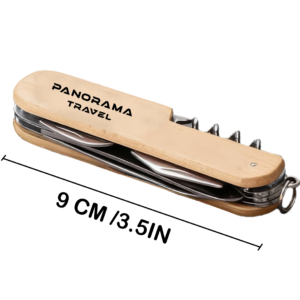
Quality Travel Products
Explore selection of high-quality travel products, developed through decades of touring experience. Each item has been carefully designed & selected to make a genuine difference during your travels—while aligning with Panorama Travel’s commitment to sustainable & responsible tourism.
We wish you a wonderful journey with Panorama Travel!
If you need any specific information or assistance, please don’t hesitate to contact us—we’re here to help.